
Taking the broad concept of how to process a claim and creating a bespoke module based system and deploying to be used by 3 teams of of 50+ members.
“ The existing claims platform impeded operational efficiency and increased the risk of human error due to inconsistent and unclear workflows, compounded by a lack of automation or continuous improvement possibilities. ”
Industry average for Claims processed per person, per day: 21
Current processing average at waggel per person, per day: 22
Current average claims processed per day at waggel: 355
Current amount of new claims raised per day: 400
Current hiring average to match demand: every 3 months
It’s important to note that this case study focuses on a key section of a wider project to build a new platform for all operations teams.
The first step was to understand the current process inside out. I spent time shadowing team members as they processed claims, noting every step, workaround, and moment of friction.
The goal was to make the process as efficient as possible while maintaining accuracy and compliance in a structure modular system.
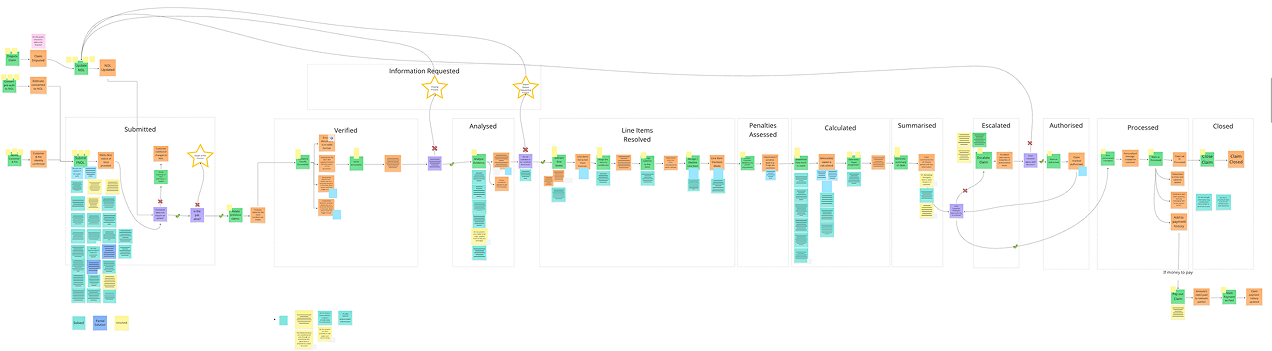
Example of breaking down all of the steps and creating a linear group flow of processing a claim
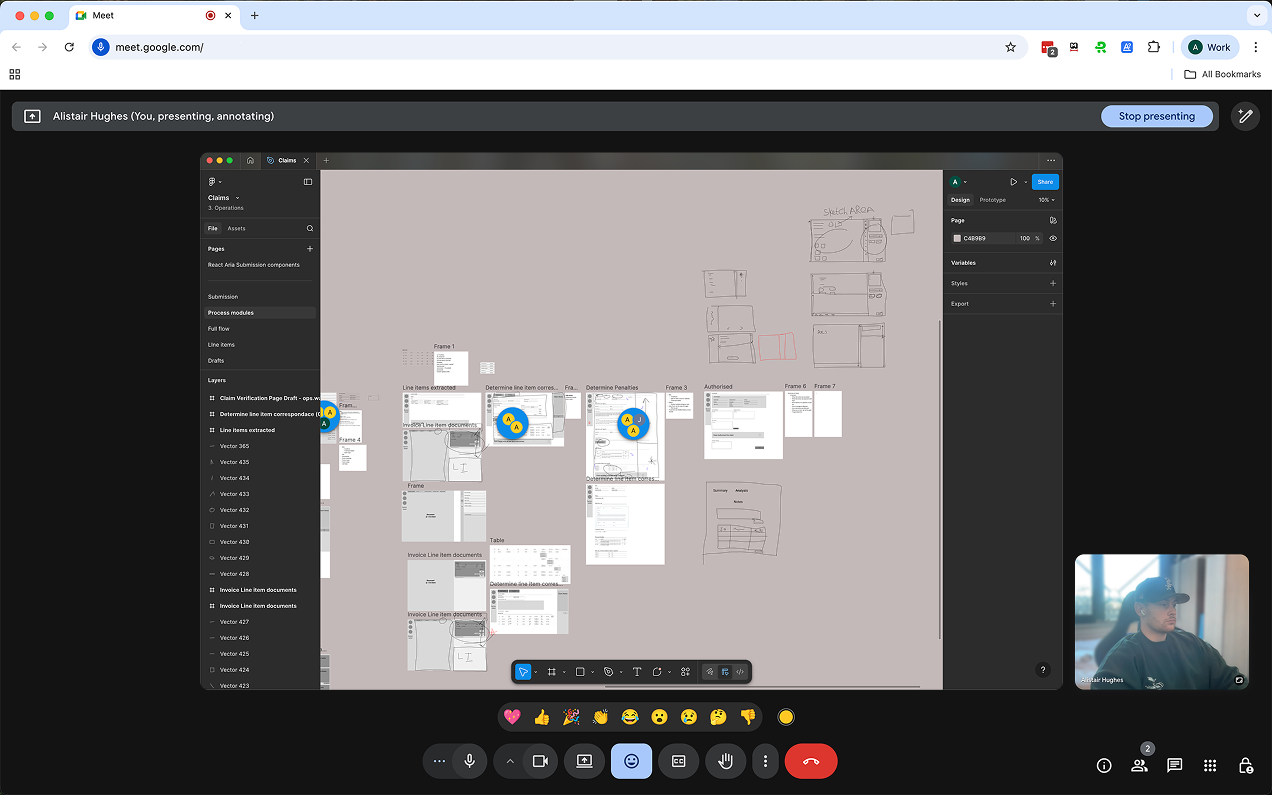
I have redacted all private company information (including the link and other team members)
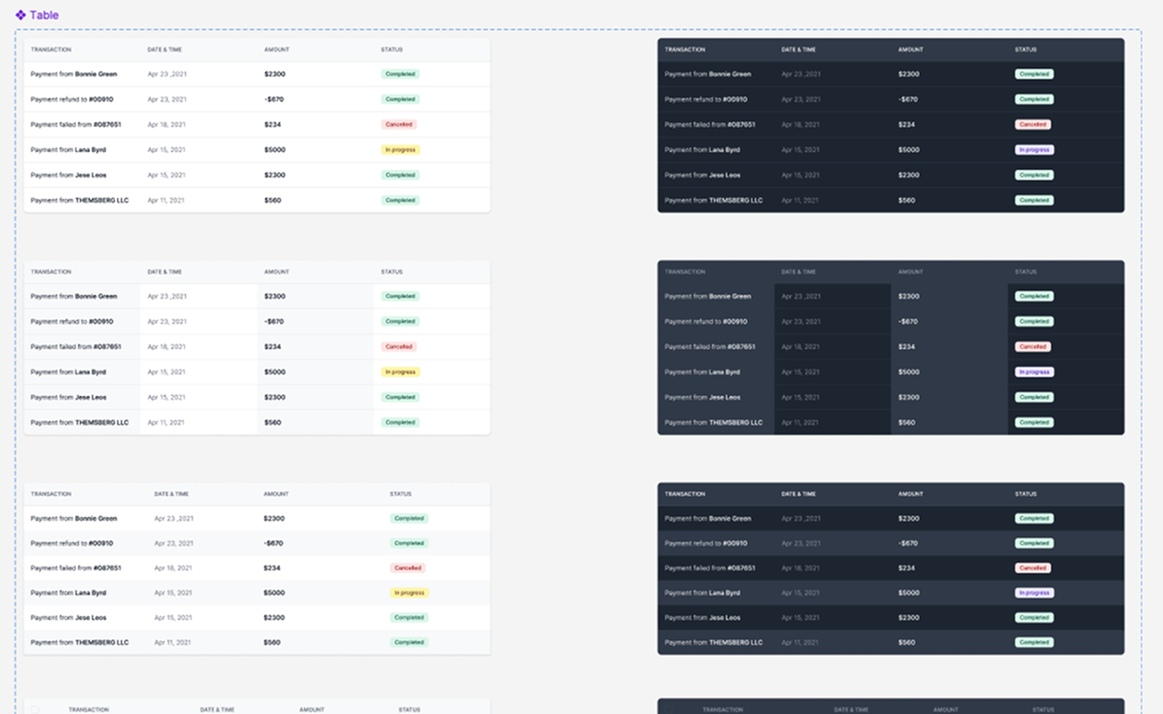
Table components
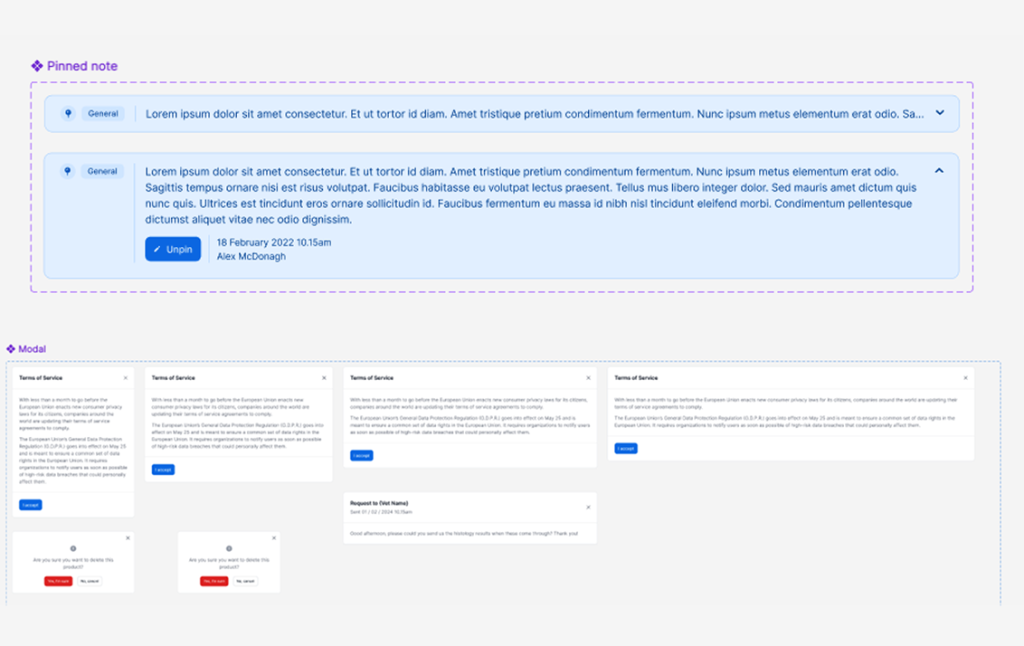
Pinned notes and modal components
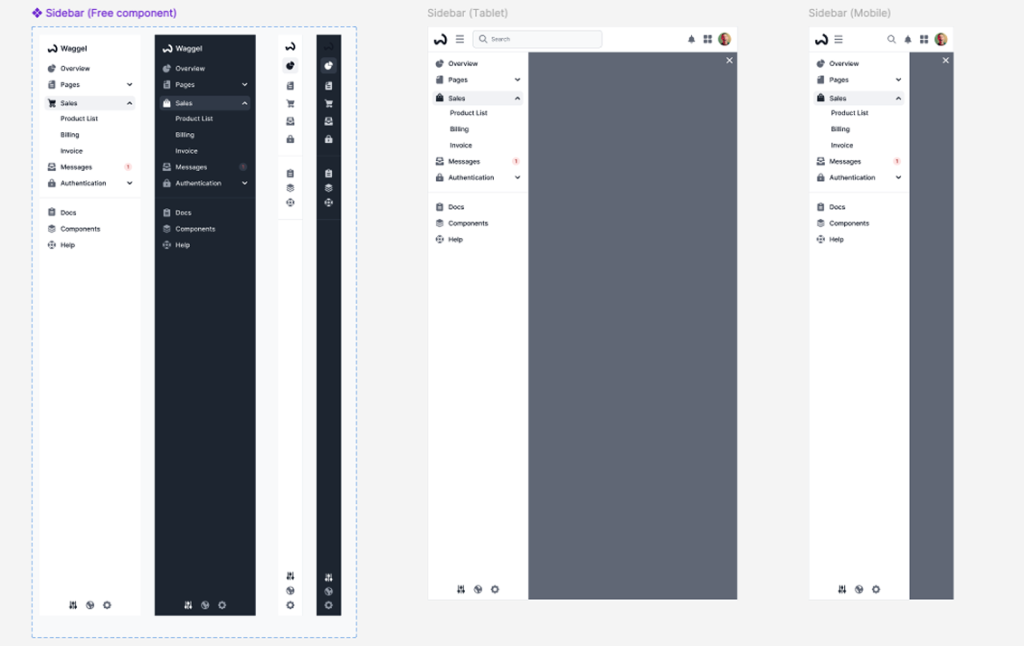
Side bar navigation components
This user-centered testing ensured that when we launched, the platform would work seamlessly for everyone who needed it.
When the new platform launched, we didn’t stop there.
Each part of the platform became its own small project, allowing for agile updates and rapid iteration based on feedback and data.
The claim processing page represents the final step in the workflow. It was designed to give users full visibility into all calculations, decisions, and actions taken throughout the claim’s lifecycle, ensuring confidence before a final outcome is communicated.
From this page, users can contact the customer with a personalised message that clearly explains the claim decision and outlines what to expect next. To support transparency and accountability, the interface also surfaces the complete message history for the claim, including who sent each message and when, reducing the risk of miscommunication or duplicated outreach.
The redesigned system transformed how the team processed claims. By introducing a structured linear flow, it ensured that users completed every required step before moving on, eliminating missed actions and reducing errors.
Training new team members became faster and easier since the process was consistent for everyone.
After launch, the results were clear:
The new system not only improved performance, it also transformed the team’s relationship with their tools, turning a once-frustrating process into a streamlined, confident workflow.
Although it was a significant change and took time to adjust after using the old system for many years, the new version is a major improvement. All the information the team needs is readily accessible when they need it. While it will take time to become as familiar as the old system, the team is extremely happy with the claims system!
– Head of claim processors’
This has completely transformed how we work. Previously, the team spent most of their day on the phone or using Gmail. Having a bespoke system tailored to our needs wonderful and will improve efficiency, allowing us to follow-ups faster and reducing the frustration of repeatedly checking for responses from vets.
– Head of Chasers
We were really happy within the team with the MVP version that was released, as it meant we didn’t have to click through the claim to read about it. However, after the summary section and additional modules were added to the pet’s claim section, it has made our lives so much easier and as a whole the team are so happy with the new version.
– Head of Customer service
Although the system has been released and we’ve continued iterating on it, we are now working on a series of large-scale improvements to further increase the product’s efficiency:
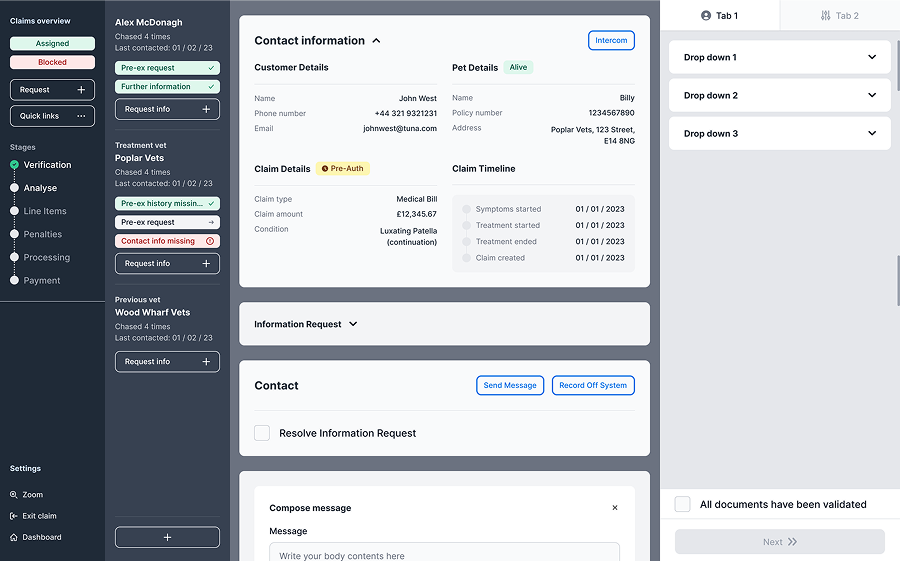
Information request
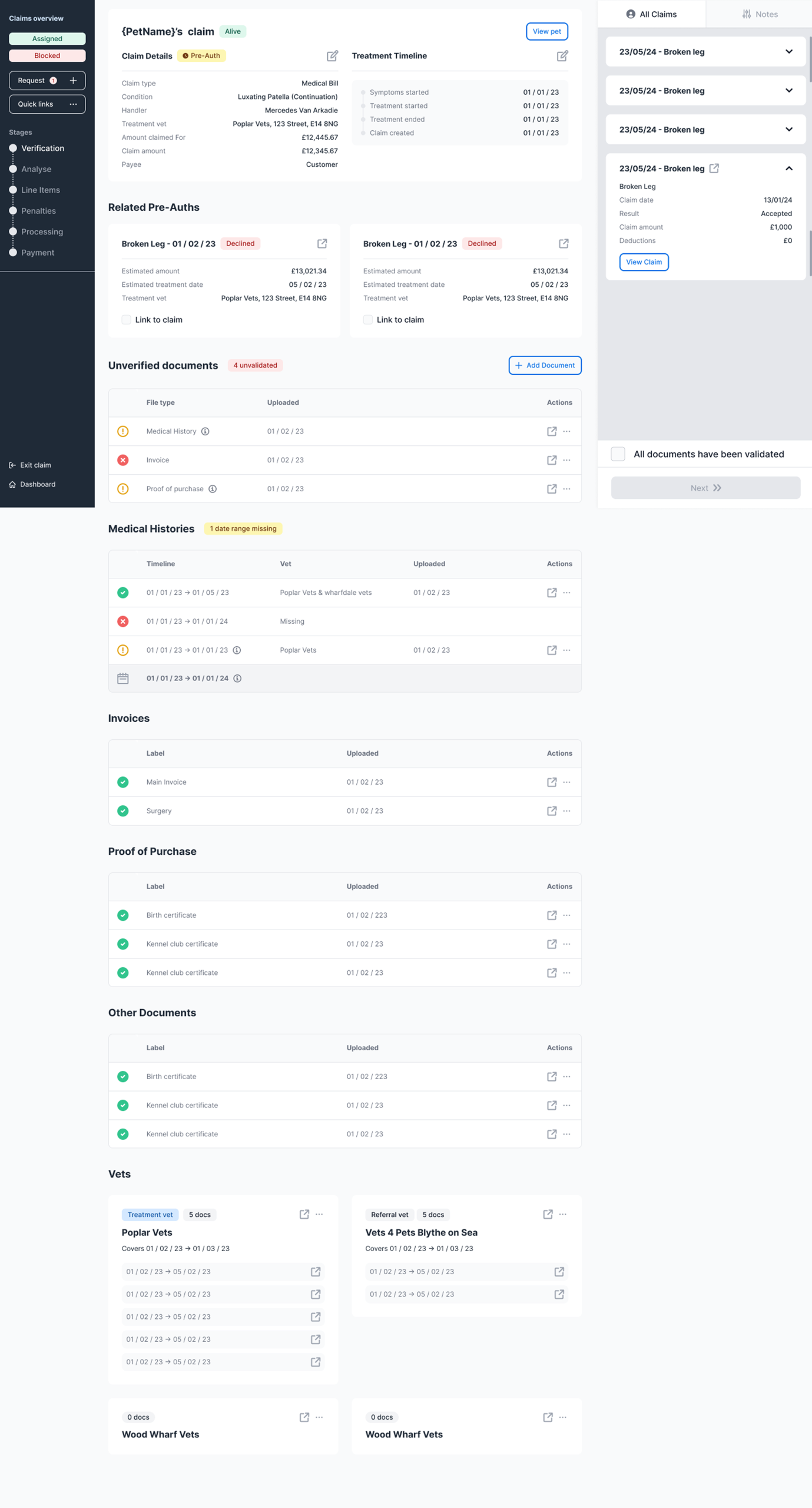
Verification
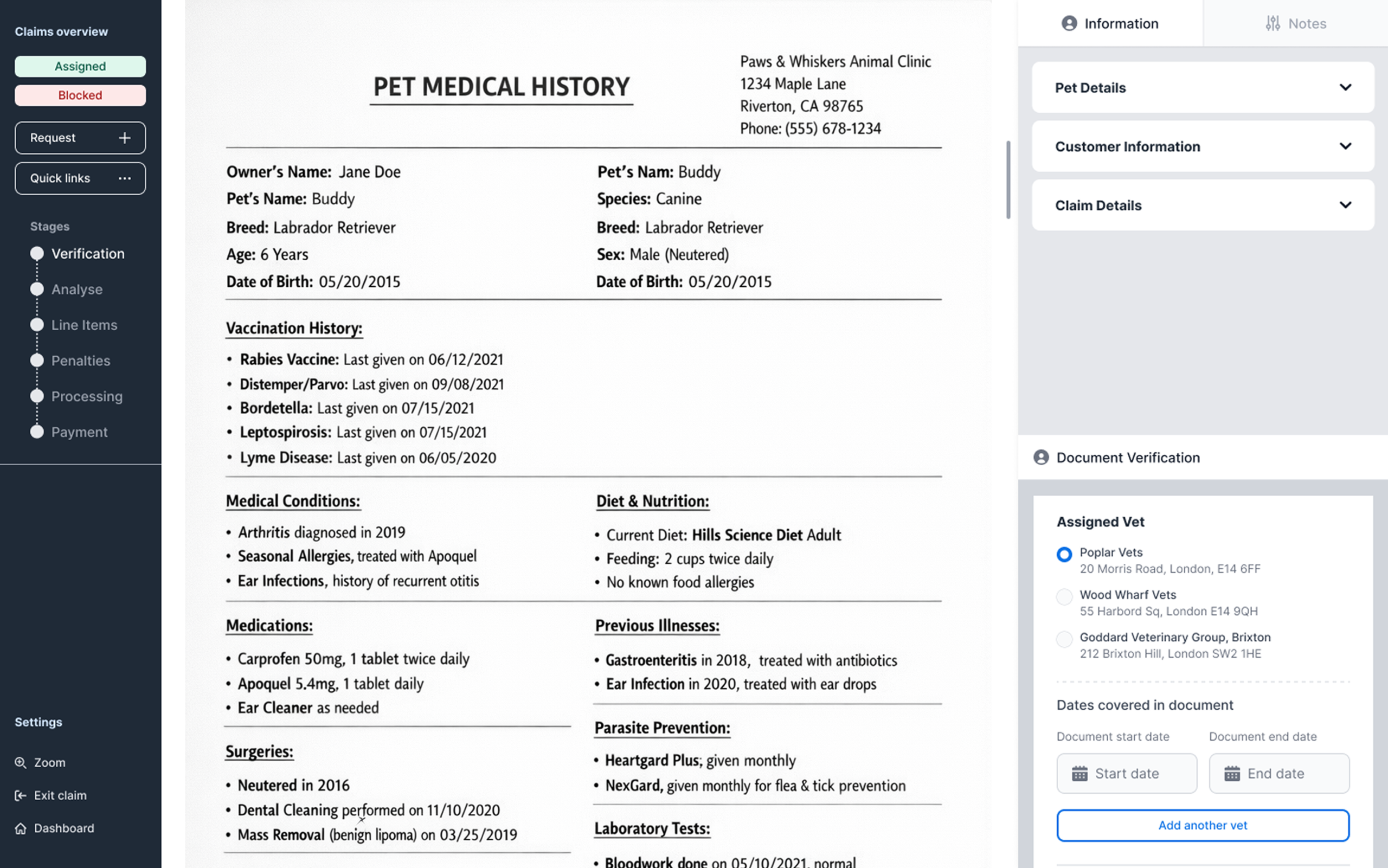
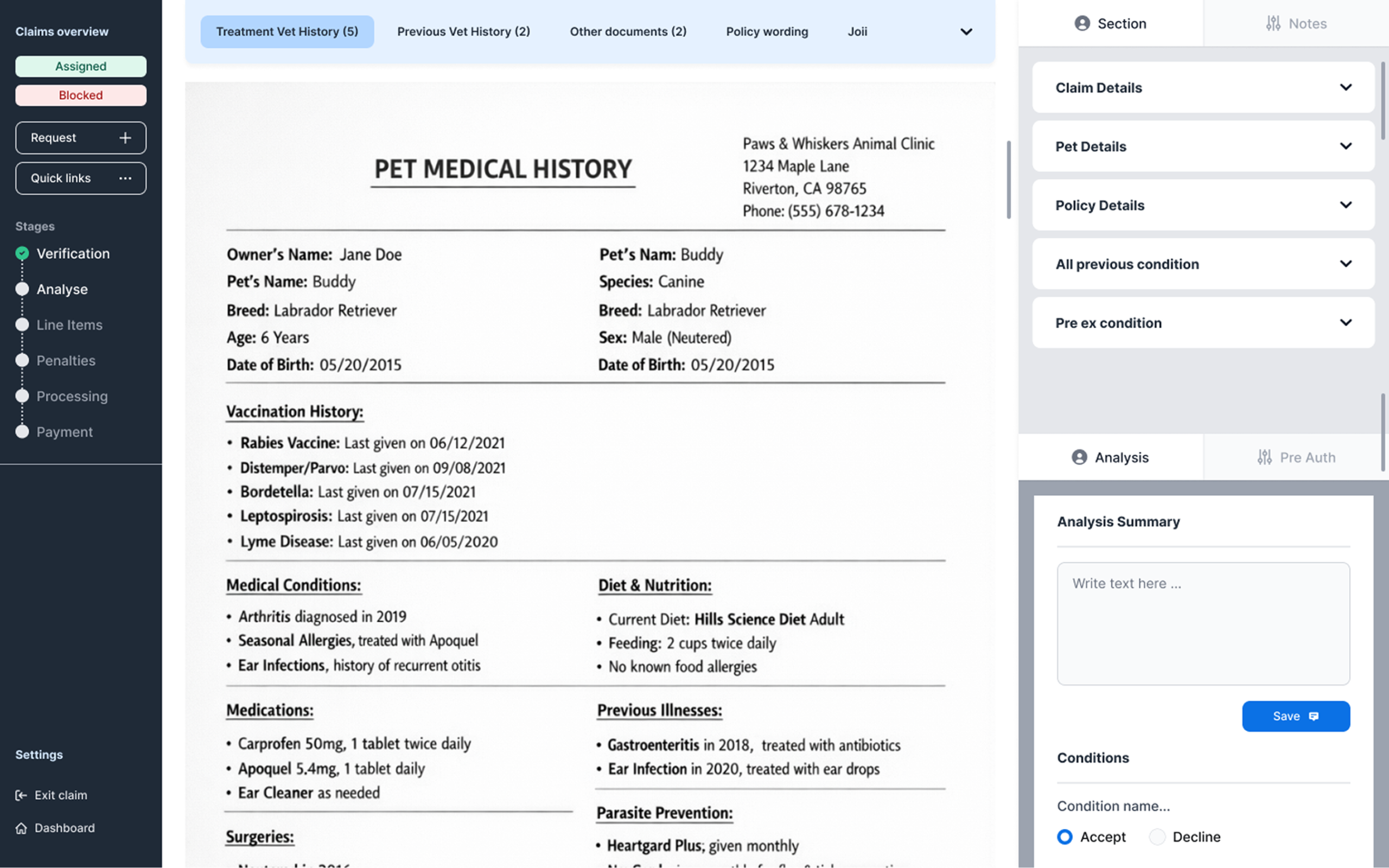
Analyse
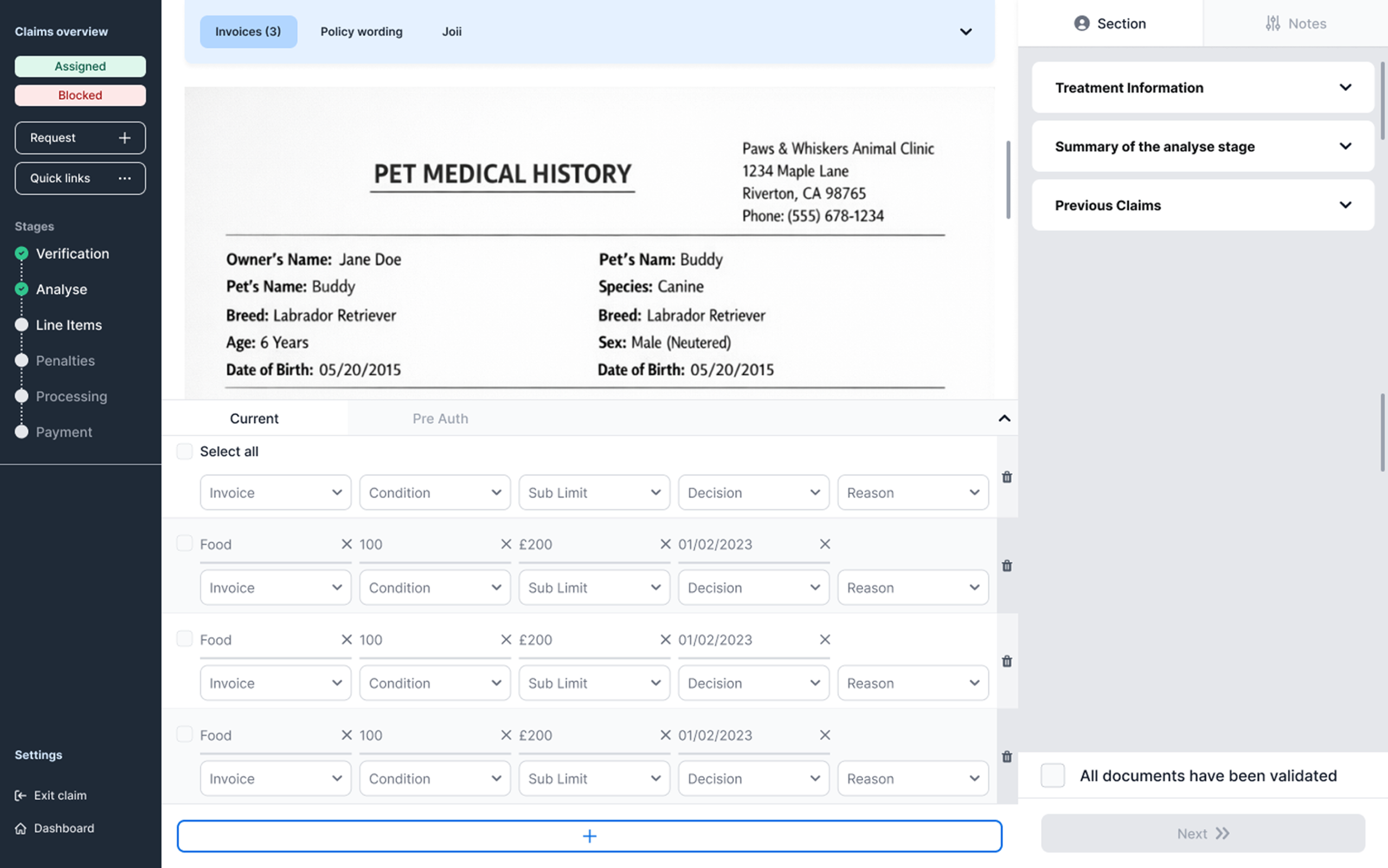
Line items
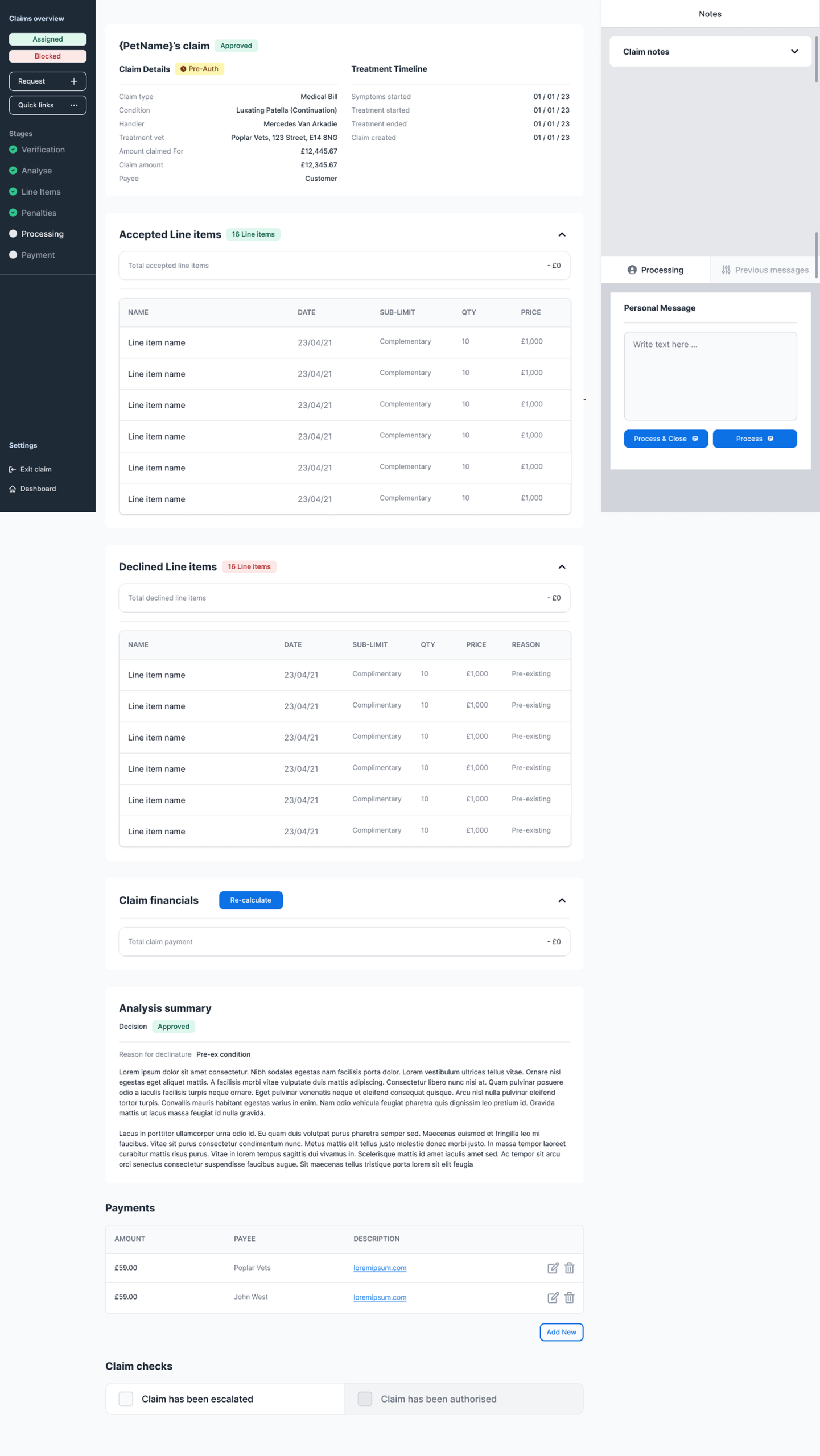
Processing
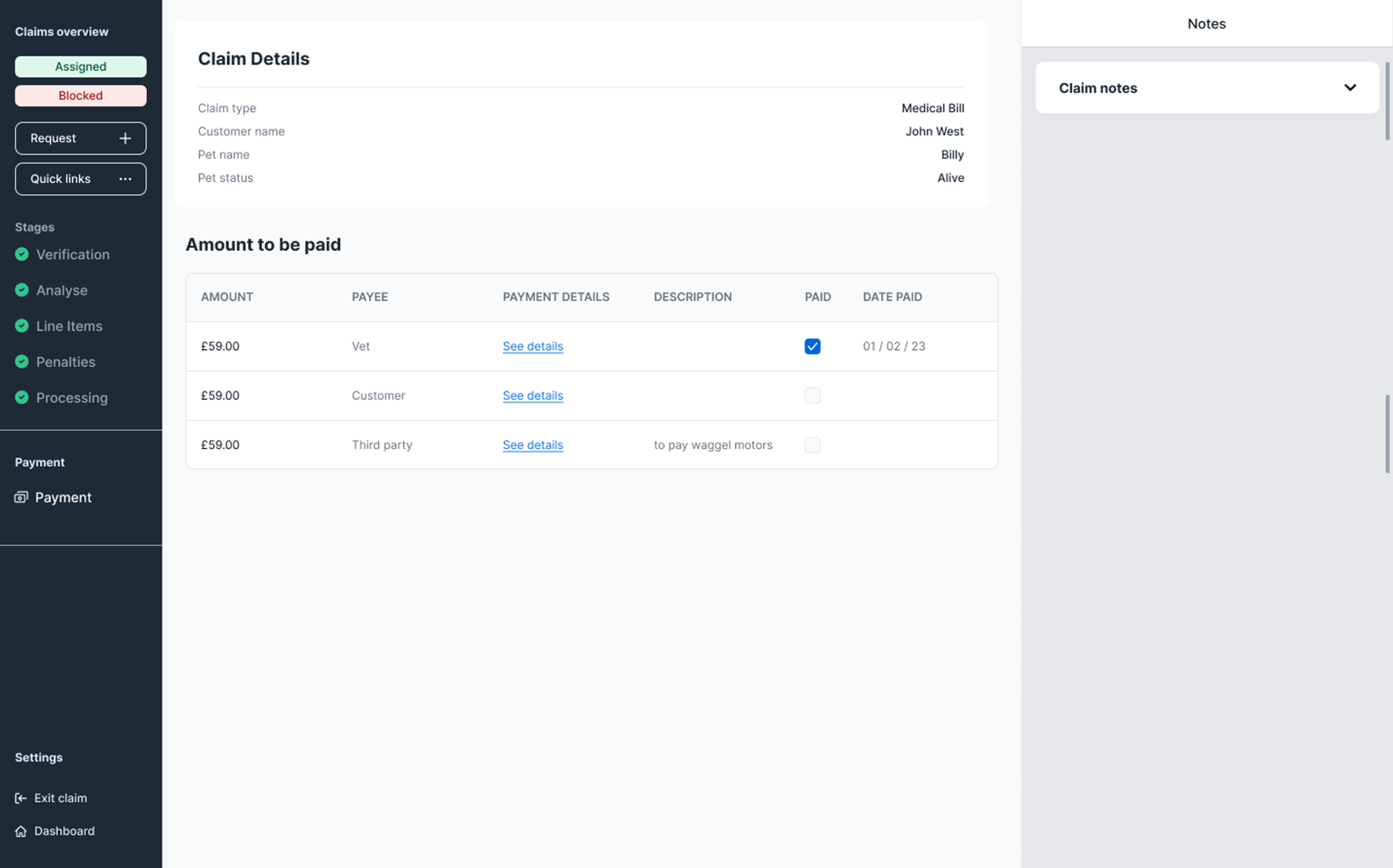
Payment