Claims

platform build

Taking the broad concept of how to process a claim and creating a bespoke module based system and deploying to be used by 3 teams of of 50+ members.

Problem statement to solve

The existing claims platform impeded operational efficiency and increased the risk of human error due to inconsistent and unclear workflows, compounded by a lack of automation or continuous improvement possibilities.

Overview

Over the last year, the number of claims processed per claims processor had hit a ceiling. No matter how we optimised workflows or trained the team, the numbers stayed the same.The only way to increase output was to add more staff — a clear sign that the system itself had reached its limit.
The existing claims platform had been built years ago for a small, flexible team. It was designed to allow a few users to manage claims in multiple ways, but as the department grew, that flexibility turned into inconsistency. The larger the team became, the higher the risk of human error. Processes varied from one user to another, and the system offered no tools to improve efficiency or standardise the workflow.
It became clear that the platform had outgrown its original purpose.

Some stats

Industry average for Claims processed per person, per day: 21
Current processing average at waggel per person, per day: 22
Current average claims processed per day at waggel355
Current amount of new claims raised per day: 400
Current hiring average to match demand: every 3 months

It’s important to note that this case study focuses on a key section of a wider project to build a new platform for all operations teams.

Understanding the process

The first step was to understand the current process inside out. I spent time shadowing team members as they processed claims, noting every step, workaround, and moment of friction.

I also conducted stakeholder interviews to align on business goals and success metrics, and team interviews to capture pain points and ideas from the people using the platform every day.
These sessions revealed a complex, non-linear process with too many manual steps and little consistency in how claims were handled.

Refining the flow

With the modular mindset, the next challenge was to refine it.
I worked closely with team members to identify:
  • Which steps could be simplified or grouped together
  • Which could be automated by the system vs needed human decision-making
  • How they could flow together without limiting the users ability

The goal was to make the process as efficient as possible while maintaining accuracy and compliance in a structure modular system.
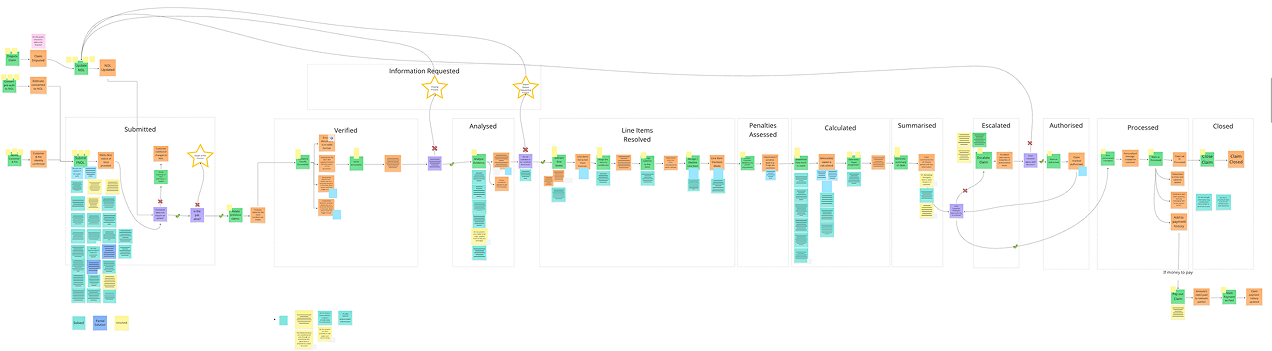
Example of breaking down all of the steps and creating a linear group flow of processing a claim
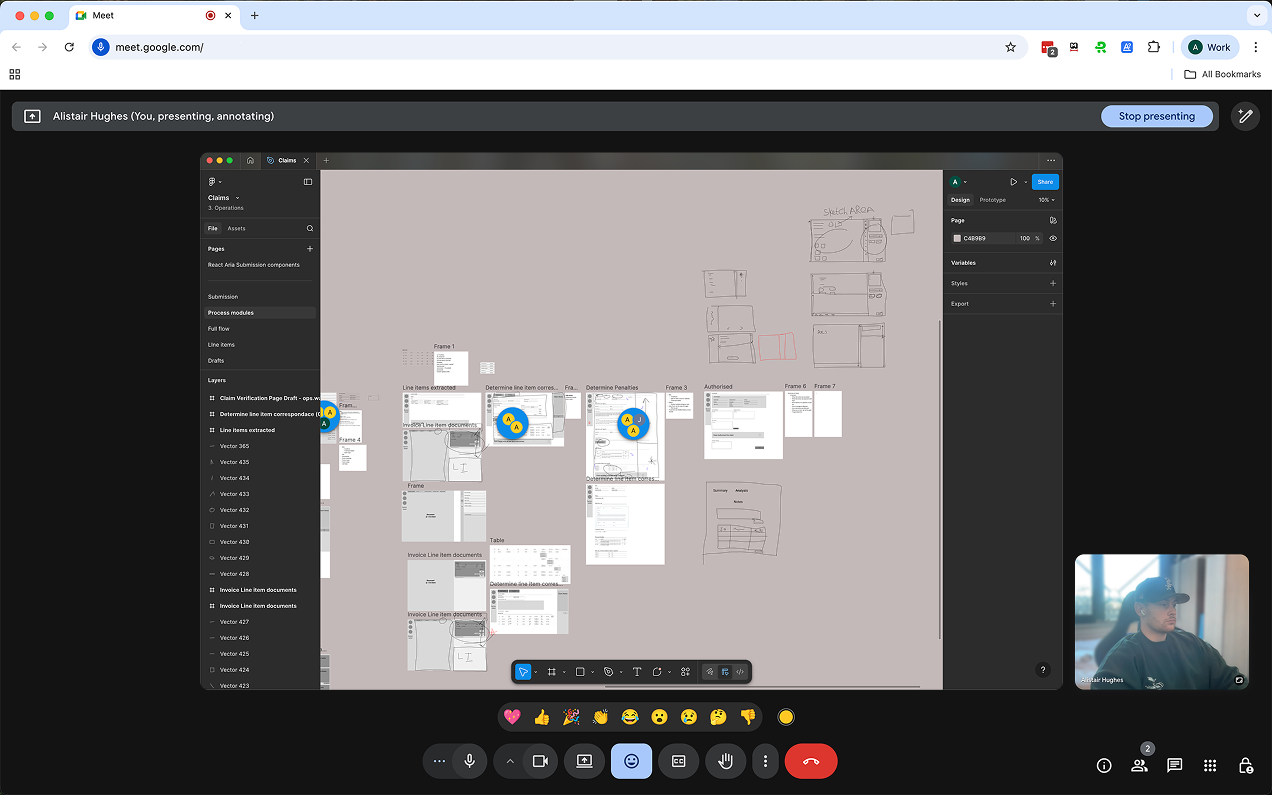
Collaborative wireframing sessions

Because this project affected so many people across different roles, collaboration was key.
I ran numerous open wireframing sessions&lt, large workshops where stakeholders and team members discussed ideas, needs, and potential pain points in real time. While the group talked, I sketched and iterated wireframes live, turning conversations into tangible designs right there in the session. These sessions ran for several weeks, till we where happy with the flow and outcome of UX.
This approach helped the entire team feel invested in the outcome and ensured the wireframes reflected real user needs, not assumptions.
After the sessions concluded, I refined the wireframes to improve the overall UX and developed clean, high-level wireframes. These were then presented to the wider company to align business stakeholders and secure buy-in on the direction.

I have redacted all private company information (including the link and other team members)

UI design and system setup

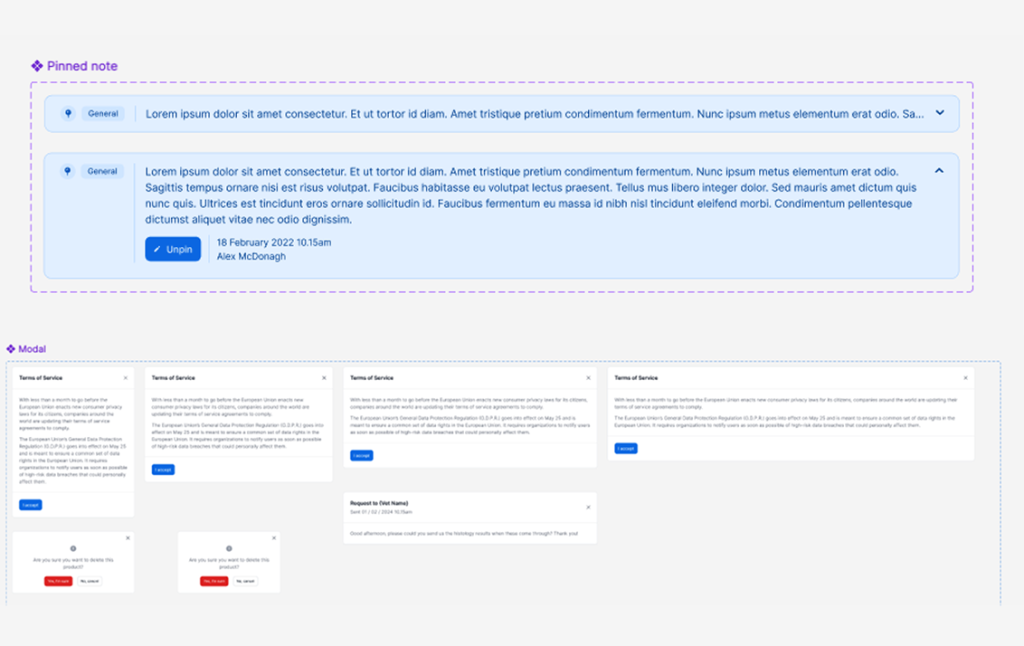
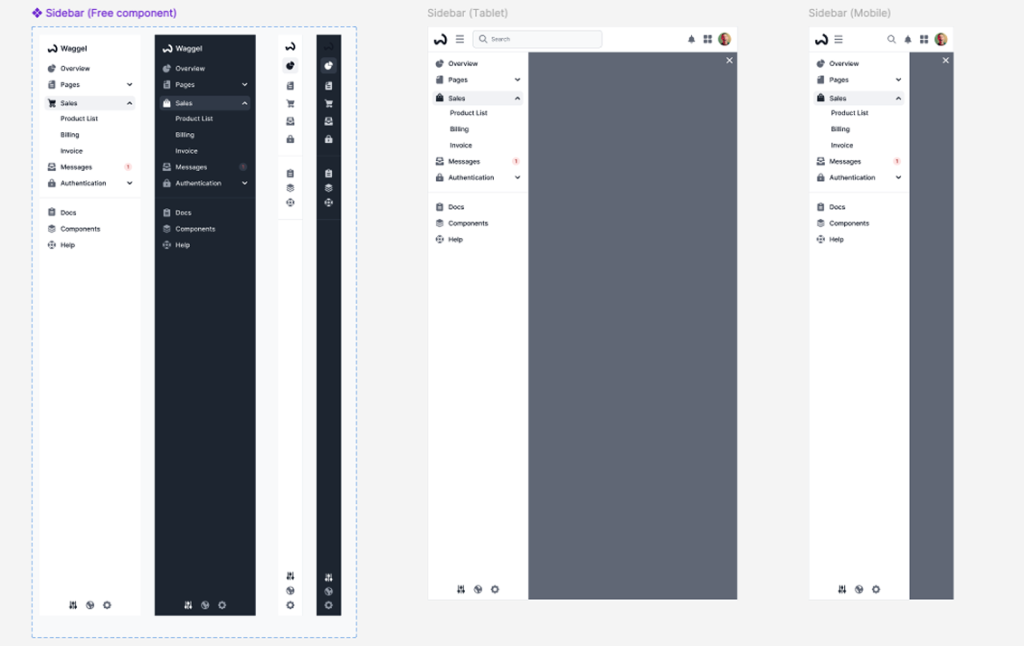
After reporting back in stakeholder meetings and getting the wireframes approved, I designed a clean, modular UI system built around reusable components. This approach not only created visual consistency but also sped up development, allowing new features or changes to be rolled out quickly and efficiently.
The interface focused on clarity: a structured linear flow that guided users step by step, reducing cognitive load and preventing errors.

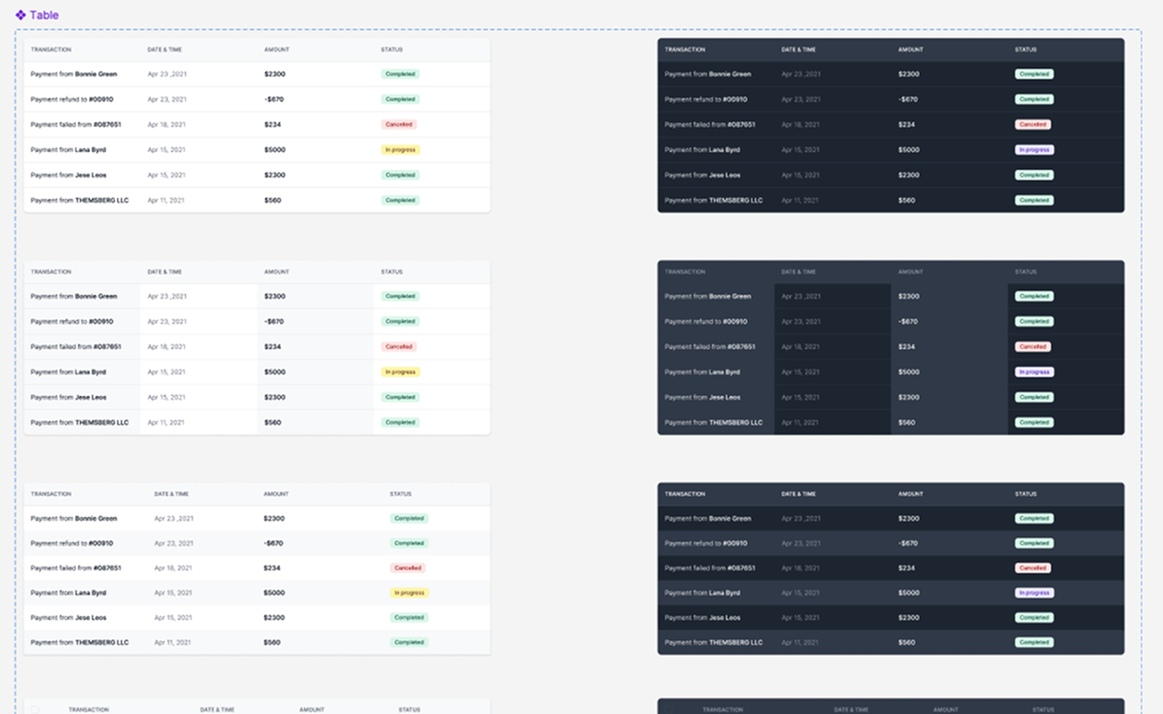
Table components

Pinned notes and modal components 
Side bar navigation components
Test, launch, improve

We ran multiple testing sessions with claims processors from different teams. Their feedback helped us refine micro-interactions, simplify inputs, and adjust layouts to better fit their real workflows.

This user-centered testing ensured that when we launched, the platform would work seamlessly for everyone who needed it.

When the new platform launched, we didn’t stop there.

Because it was built in a modular way , we could refine and enhance individual sections over time — some becoming fully automated, others receiving incremental workflow improvements.

Each part of the platform became its own small project, allowing for agile updates and rapid iteration based on feedback and data.

Key Solutions

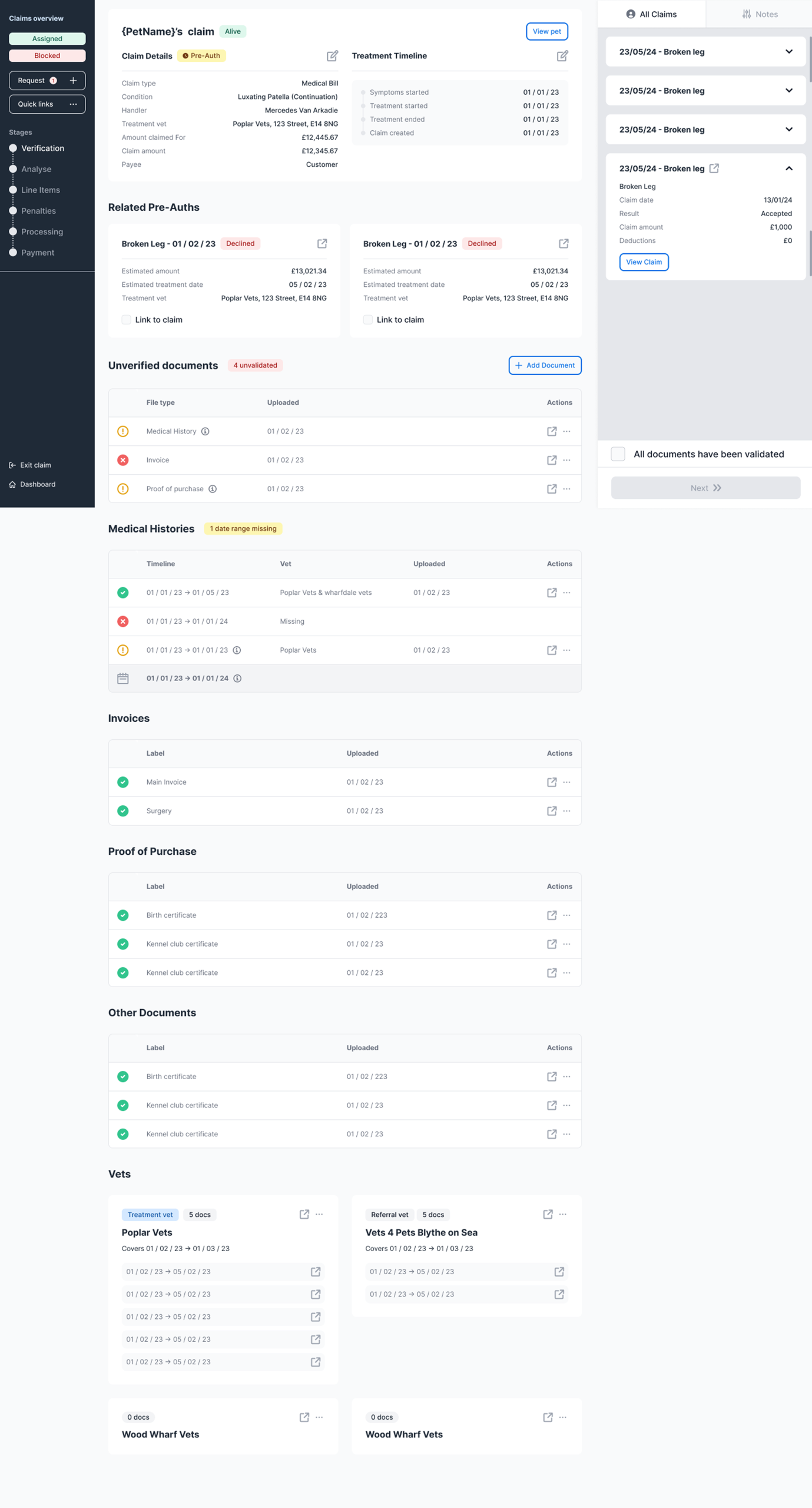
Verifying documentation

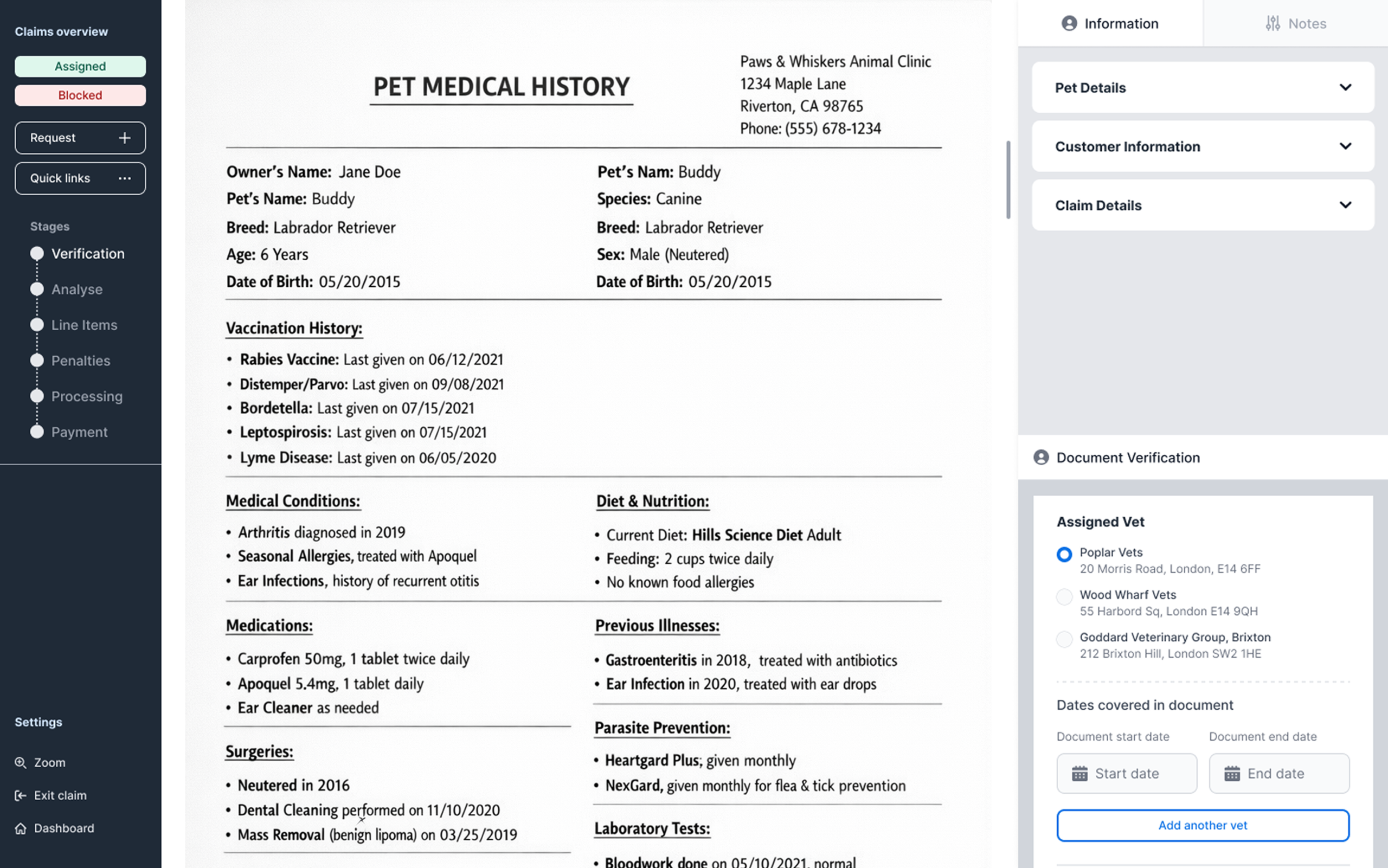
At the start of the module-based workflow, users are required to verify all documents submitted with a claim before it can be analysed by another member of staff. This step was intentionally introduced to ensure document completeness and accuracy early in the process, reducing downstream interruptions during analysis.
The system surfaces all relevant information alongside each document, allowing users to set key dates, move easily between documents, assign the correct vet, and maintain clear context throughout verification. Once verification is complete, users are provided with an overview of all submitted documents before passing the claim on for analysis, supporting confidence that nothing has been missed.
As a result of this design, document verification speed increased by approximately 42% , and the need to chase additional documentation during the analysis phase was reduced by around 50%.

Contacting vets and customers

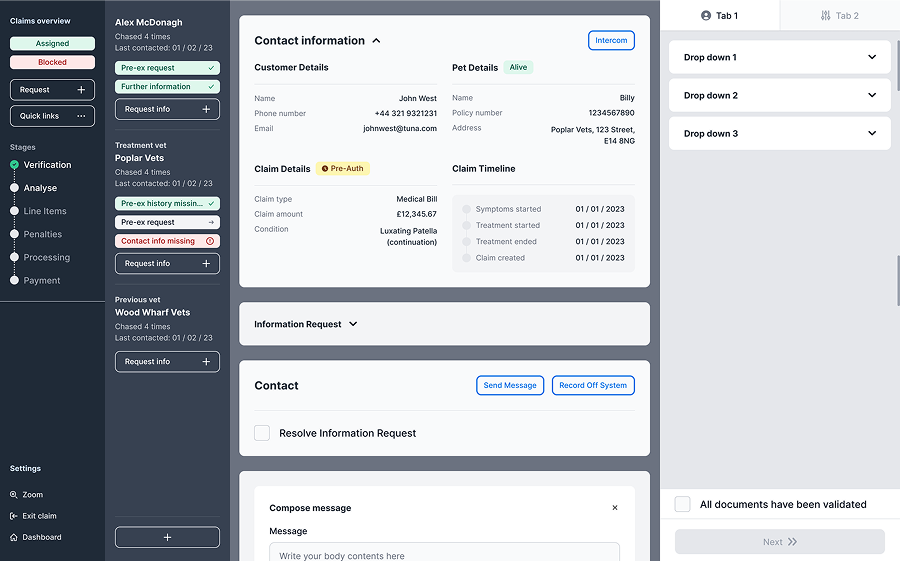
A dedicated information-requesting section was introduced and made accessible from every stage of the claim journey. This was designed to remove friction caused by users needing to leave their current task to request missing information.
The solution allows users to contact either the vet or the customer at any point in the process, while keeping relevant context visible in a persistent right-hand panel. This panel surfaces the information required for the request, existing notes on what is outstanding, and a summary field where users can record responses as information is received.
To further reduce context switching, the system integrates Intercom, enabling users to place calls directly within the workflow.

Analysing documents

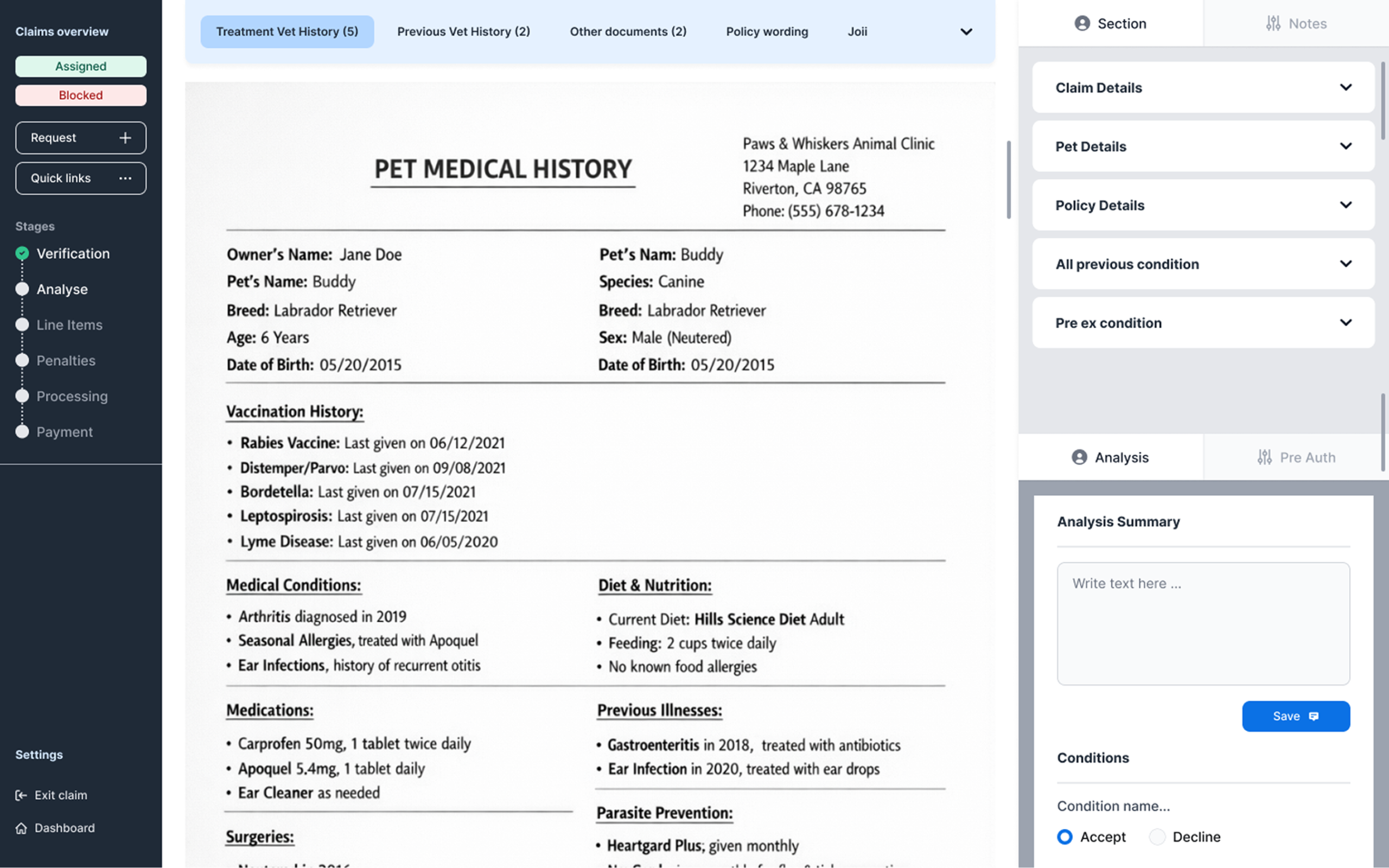
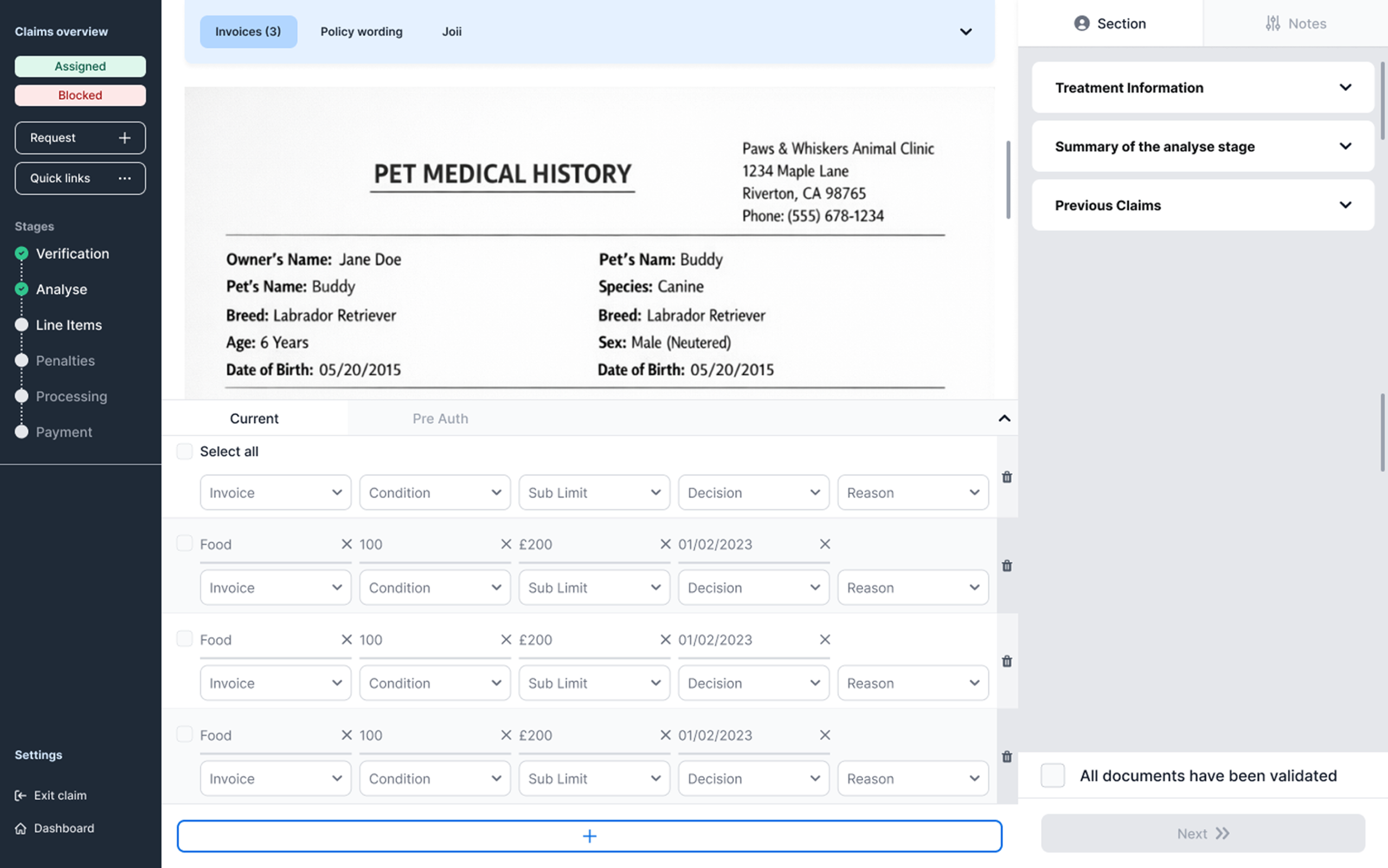
A unified customer document viewer was designed to allow users to review all documentation submitted with a claim, view relevant policy information, and complete claim analysis within a single page. This approach was intentionally chosen to reduce context switching and cognitive load during one of the most time-intensive stages of the workflow.
The analysis section also enables users to reference any pre-authorised claims associated with the current case, giving them immediate access to prior decisions and reducing duplicate assessment work. This helped users move more quickly through familiar scenarios without sacrificing accuracy.
Since the majority of claim processing time occurs on this page, consolidating these actions into one cohesive interface resulted in a 15% increase in overall claim processing speed.

Processing claims

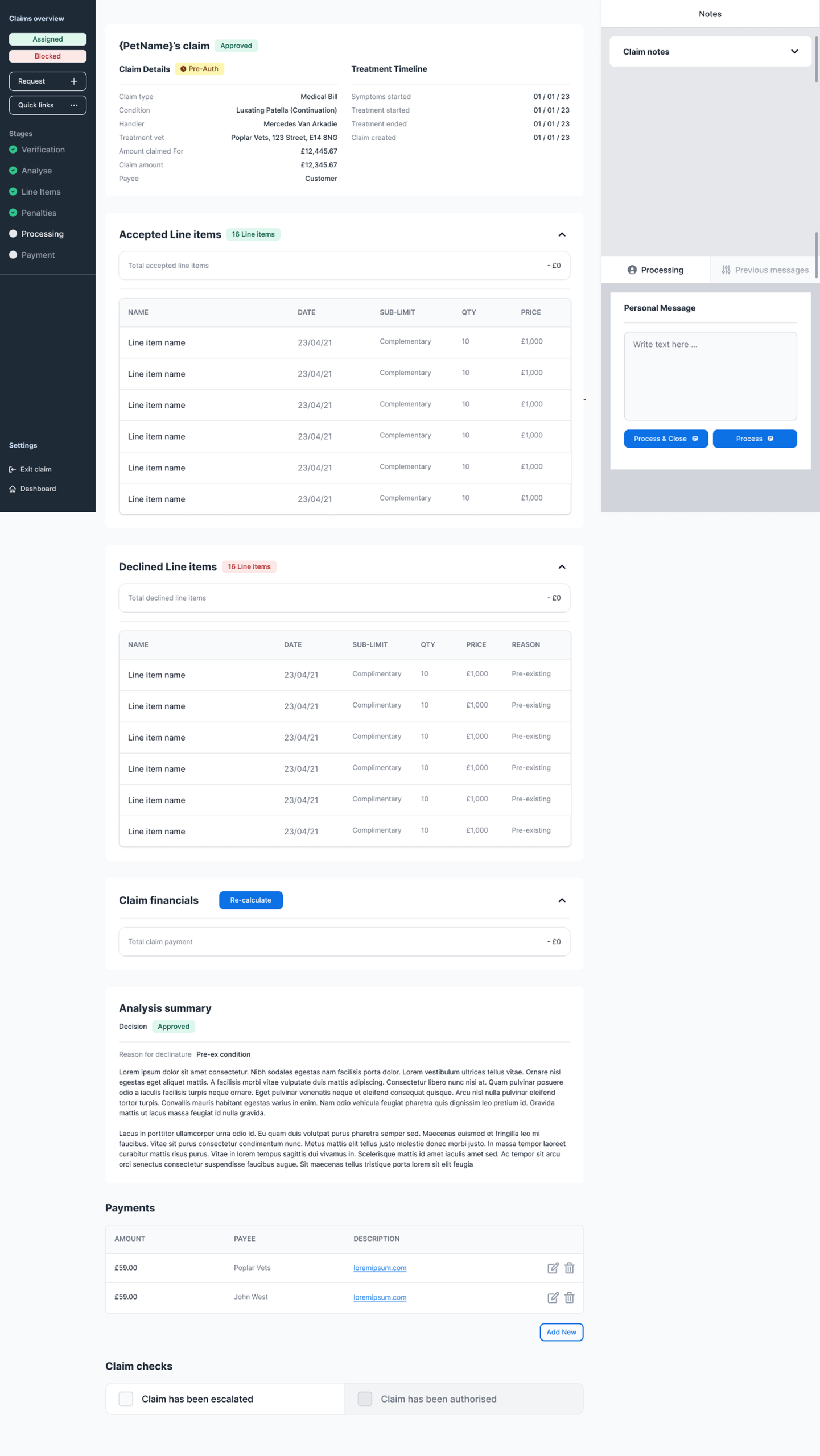
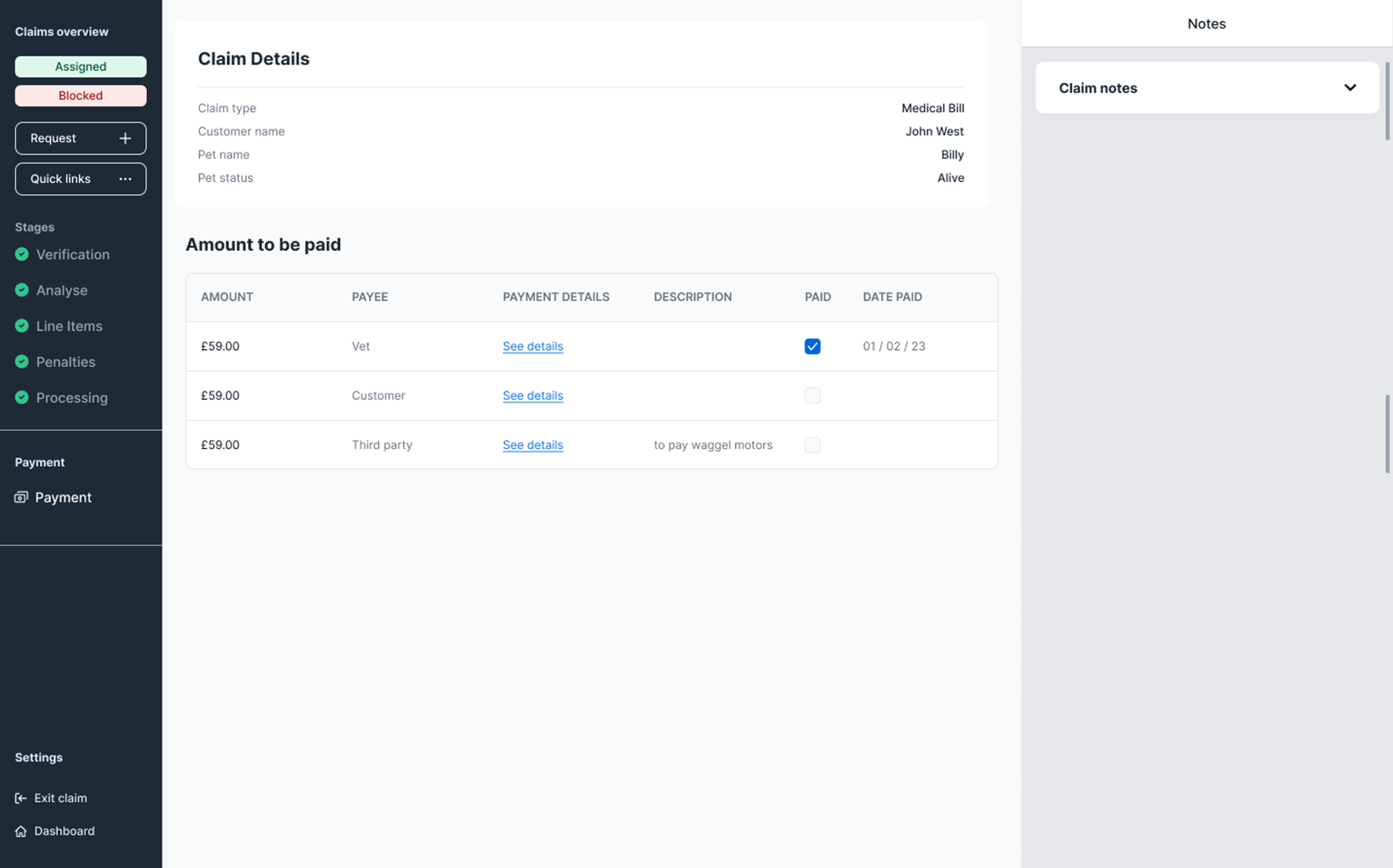
The claim processing page represents the final step in the workflow. It was designed to give users full visibility into all calculations, decisions, and actions taken throughout the claim’s lifecycle, ensuring confidence before a final outcome is communicated.

From this page, users can contact the customer with a personalised message that clearly explains the claim decision and outlines what to expect next. To support transparency and accountability, the interface also surfaces the complete message history for the claim, including who sent each message and when, reducing the risk of miscommunication or duplicated outreach.

Prior to this redesign, 24% of claims contained payment leakage, contributing to approximately 3% of total claim costs being paid incorrectly. By centralising decision data and improving pre-payment visibility at this final step, the new system reduced payment leakage to 0%, with no claims paid incorrectly.

Result and impact

The redesigned system transformed how the team processed claims. By introducing a structured linear flow, it ensured that users completed every required step before moving on, eliminating missed actions and reducing errors.

Training new team members became faster and easier since the process was consistent for everyone.

After launch, the results were clear:

  • Processing speeds increased by 15% (21% higher than industry average) (based on data collected from month two onward)
  • Claim leakage was eliminated entirely, meaning no incorrect payouts due to human error
  • Team feedback was overwhelmingly positive, with users describing the new platform as faster, more intuitive, and more enjoyable to use

The new system not only improved performance, it also transformed the team’s relationship with their tools, turning a once-frustrating process into a streamlined, confident workflow.

Team feedback

As this project was for the internal company, we were able to speak with the teams and gather feedback and statements about the new platform. I can’t include all the feedback, however this was the general team feedback through the head of each team.

Although it was a significant change and took time to adjust after using the old system for many years, the new version is a major improvement. All the information the team needs is readily accessible when they need it. While it will take time to become as familiar as the old system, the team is extremely happy with the claims system!

– Head of  claim processors’

This has completely transformed how we work. Previously, the team spent most of their day on the phone or using Gmail. Having a bespoke system tailored to our needs wonderful and will improve efficiency, allowing us to follow-ups faster and reducing the frustration of repeatedly checking for responses from vets.

– Head of  Chasers

We were really happy within the team with the MVP version that was released, as it meant we didn’t have to click through the claim to read about it. However, after the summary section and additional modules were added to the pet’s claim section, it has made our lives so much easier and as a whole the team are so happy with the new version.

– Head of Customer service 

Next steps

Although the system has been released and we’ve continued iterating on it, we are now working on a series of large-scale improvements to further increase the product’s efficiency:
  • OCR (Optical Character Recognition) invoice line item  The purpose of this feature is to automatically add all line items within an invoice to the processing table, enabling the data to be stored for analysis.
  • AI claim assessment for basic claim an AI based automation system for automatic claim decisions
  • Surprise and delight changes (As each teams gets more used to the new system we are introducing more small ‘surprise and delight’ changes, based off their request to improve their quality of life

Final designs

Information request

Verification

Document verification

Analyse

Line items

Processing
Payment